
Module 2 · Chlorine Basics
Chlorine Residual
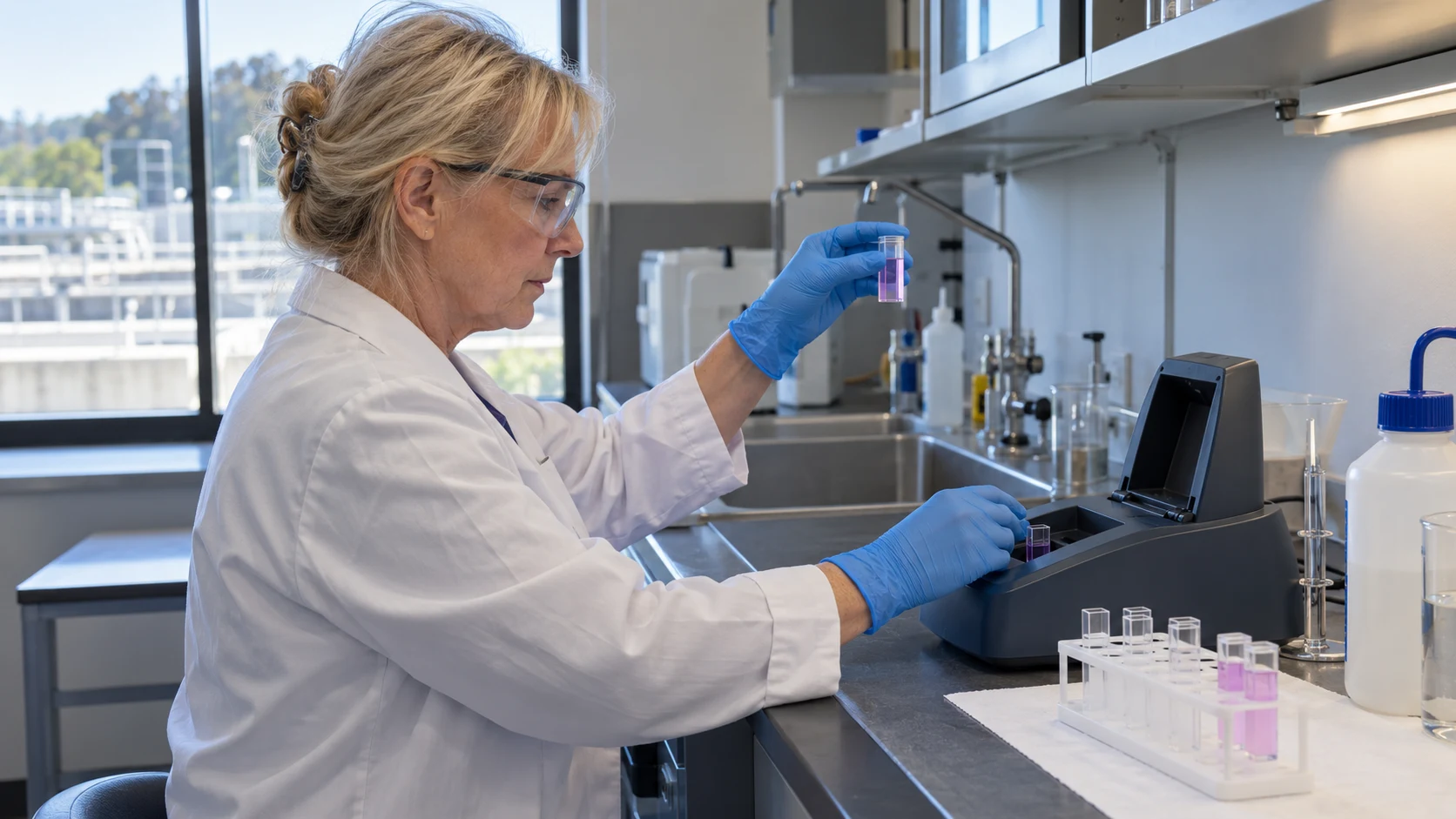
Chlorine residual is the measurable chlorine left in the water after some chlorine has reacted.
residual includes forms that are generally stronger and faster disinfectants. Below about 7.5, most free chlorine is hypochlorous acid, the stronger form; above pH 7.5, most is the weaker hypochlorite ion. includes chloramines formed when chlorine reacts with ammonia compounds. To get past chloramines to free chlorine, called breakpoint, plants typically need about 8 to 10 mg/L of chlorine for each 1 mg/L of ammonia-nitrogen. includes both free and combined forms.
Wastewater plants often work with total residual because ammonia is commonly present. The correct test depends on the permit, the process, and the written lab method. A result only has meaning when the sample point, timing, test method, and instrument quality are correct.
Residual is a process clue, not the whole answer. A plant can have measurable residual and still get a poor indicator result if mixing, contact time, solids, sampling, or another condition is poor. Compare residual with the rest of the process.
Exam Need to Know
- Total residual = free + combined chlorine.
- Combined chlorine is chloramines, formed when chlorine meets ammonia.
- Wastewater plants often test total residual because ammonia is common.
Exam area: Laboratory