
Module 4 · Air Hazards and Gas Monitoring
Hydrogen Sulfide
Hydrogen sulfide is a toxic and flammable gas that can be present in wastewater systems.
It may form when organic material breaks down without oxygen. It can collect in sewers, wet wells, sludge areas, tanks, and enclosed process spaces. It is often called H2S.
Low amounts may smell like rotten eggs, but smell is not a safe warning. The gas can reduce a person’s ability to smell it. At about 100 ppm it can knock out your sense of smell, and NIOSH lists 100 ppm as immediately dangerous to life or health. Higher exposure can cause collapse and death.
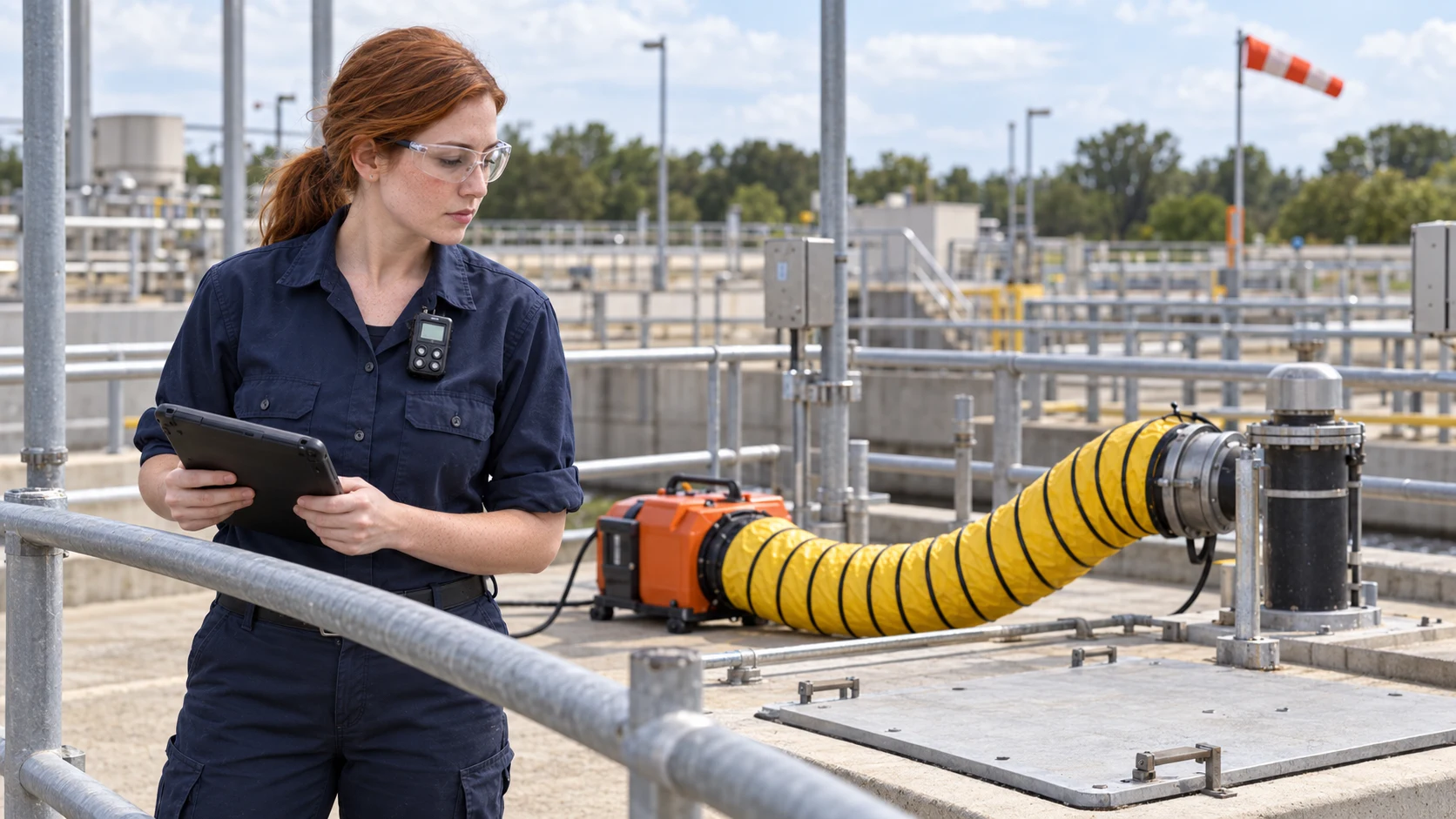
Use fixed or portable monitoring as required. OSHA’s general industry limit for H2S is a 20 ppm ceiling, and NIOSH recommends no more than 10 ppm for 10 minutes. Ventilate and control the source when possible. Leave immediately when an alarm or symptom occurs. Never attempt an unprotected rescue in a suspected H2S atmosphere.
Wind and building pressure can move gas toward unexpected areas. A worker outside a hatch may still be exposed if the opening vents toward the . Approach from the upwind side and use remote sampling before opening further.
Hydrogen sulfide can corrode concrete, metals, electrical parts, and instruments. Corrosion damage may create structural or equipment hazards even when gas readings are acceptable at that moment. Report damaged covers, ladders, railings, fasteners, and wiring in areas with a history of gas.
Exam Need to Know
- Hydrogen sulfide (H2S) is a toxic and flammable gas.
- Low levels smell like rotten eggs, but H2S can deaden smell.
- If H2S is suspected, never try a rescue without protection.
Exam area: Security, Safety, and Administration